



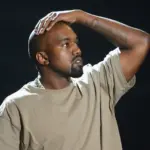
At the end of January, Ye (formerly Kanye West) issued an apology to the Jewish community saying his “reckless behavior” was caused by brain damage. But he’s still fighting an antisemitism lawsuit, arguing in new court papers that certain comments were art.
In an appeal filed on Monday (Feb. 23), Ye’s lawyers say a lower court was wrong not to dismiss a Jewish marketing specialist’s workplace discrimination claims on First Amendment grounds. Doubling down on their arguments from the initial lawsuit, the rapper’s attorneys say his public persona is “intentionally provocative and thematically charged,” and that comments calling himself a “Nazi” and “Hitler” to this person were protected as part of his artistic expression.
“The communications she challenges — creative directives, conceptual drafts, provocative imagery, marketing strategy and staffing decisions shaping a public-facing message — were not collateral to Ye’s art; they were part of its development,” write Ye’s attorneys Andrew Cherkasky and Katie Cherkasky.
Related


These arguments come almost exactly a month after Ye apologized for his years of public antisemitism in a full-page Wall Street Journal ad. Ahead of the release of his next album Bully through a new partnership with Gamma., Ye wrote that his controversial comments stemmed from a 2002 car crash that caused severe brain damage and bipolar disorder and led to “poor judgment and reckless behavior,” much of which he does not remember.
“I regret and am deeply mortified by my actions in that state, and am committed to accountability, treatment and meaningful change,” wrote Ye. “It does not excuse what I did, though. I am not a Nazi or an antisemite. I love Jewish people.”
Ye began to post antisemitic comments online in 2022, leading him to lose lucrative deals with brands like Balenciaga and Adidas. He previously apologized for the hate speech in a 2023 post in Hebrew ahead of the release of his chart-topping album Vultures 1 but later reversed course, praising Hitler in an early 2025 social media tirade and selling swastika t-shirts on his website.
Billboard asked Ye’s spokesperson, right-wing personality Milo Yiannopolous, whether the rapper’s apology is contradicted by his attorneys’ continued legal arguments that his antisemitic speech is art. Yiannopolous responded, “The premise of your question is faulty.”
“There is no contradiction,” said Yiannopolous. “Artistic product, even if interpreted as sympathetic to, or in support of, questionable or controversial or merely unfashionable ideology, is protected speech. The fact that Ye may or may not regret an artistic expression today does not mean that it was not an artistic expression when it was made.”
“Billboard is not in a position to adjudicate which of Ye’s utterances is art, and neither am I,” added Yiannopolous. “A man with 75 Grammy nominations must be permitted to make that determination for himself. I would go further. Ye does not merely produce art. He is art. His life and lifestyle, the clothes he wears, the language he uses, his means of expression and his opinions, be they political or otherwise, are all art.”

Attorneys for the Jewish marketing specialist, who’s suing under the anonymous moniker Jane Doe, did not return a request for comment.
Doe sued Ye for workplace discrimination last year, claiming he subjected her to “antisemitic vitriol” while promoting Vultures 1 in 2024 and later fired her for complaining about it. The lawsuit cites text messages in which Ye allegedly wrote “I am a Nazi” and “welcome to the first day of working for Hitler.”
Attorneys for Ye sought to throw out the case under California’s anti-SLAPP statute, which shields against legal actions that threaten free speech. A Los Angeles judge rejected that attempt this summer, ruling that internal messages in a private workplace do not fall under the umbrella of First Amendment-protected artistic expression.
Ye’s lawyers are now challenging that decision and urging a California appeals court to end the lawsuit. In Monday’s appellate brief, they argued that the rapper’s texts to Doe were all sent in the context of marketing Vultures 1, including responding to critiques that the album cover evoked Nazi imagery.
“For an artist at that level, internal exchanges with a publicist about marketing, imagery and thematic presentation are not ‘private musings’ disconnected from public concern; they are the collaborative process through which expressive works are shaped for public reception,” reads the brief.
Doe’s lawyers are set to respond with their own court papers in May. If Ye loses the appeal, the discrimination claims will move forward into evidence discovery.
The case is among numerous civil lawsuits brought in recent years over working conditions at Ye’s web of companies, including his Yeezy fashion line and now-shuttered private school Donda Academy. The first of these cases, a dispute with a construction worker on his Malibu mansion, is on trial now in Los Angeles court. A jury heard opening statements on Tuesday (Feb. 24), and Ye himself is expected to testify in the coming days.