



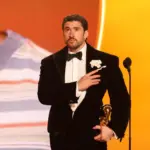
If you’ve watched an awards show in the past year, there’s a good chance Raj Kapoor was its executive producer, showrunner or both.
Related


Kapoor served as executive producer for the Grammy Awards on Feb. 1 and is serving as executive producer and showrunner for the Academy Awards on March 15 and the Academy of Country Music Awards on May 17. He’ll serve as both producer and co-showrunner (alongside Sarah Levine Hall) of the Tony Awards on June 7.
This will be Kapoor’s first time on the Tonys production team, but he has a long history with these other shows. Kapoor’s credits include the 10 most recent Academy Awards and the 13 most recent Grammy Awards, as well as such other awards shows as the Emmys, iHeartRadio Music Awards, Latin Grammys, People’s Choice Awards and Radio Disney Music Awards.
Kapoor has won two Primetime Emmys. The 2024 Oscars, which he executive produced, was voted outstanding variety special (live). Adele: One Night Only (2021) which he also executive produced, was voted outstanding variety special (pre-recorded). His other Emmy nods are for two other Oscar telecasts, four Grammy telecasts and the 2022 special Norman Lear: 100 Years of Music & Laughter.
In the following Q&A, Kapoor discusses his good fortune in television, why he’s grateful to his parents for letting him stay up past his bedtime to watch awards shows, his relationship to the famed Indian filmmaker of the same name — and why he prefers live TV, despite occasional imperfections, to pre-recorded shows. The conversation has been lightly edited for length and clarity.
When did you start watching the Tonys?
I’ve watched all these shows since I was a kid. These were always my favorites – the Academy Awards, the Grammys and the Tonys. I remember begging my parents to see if I could stay up late so I could watch. I’d probably only be allowed to watch the first hour. And I always wanted to ask for another half-hour, or peer around the corner to see if I could still see a little bit more, because I always thought they were so exciting and glamorous and beautiful, and I wanted to see all the music performances. They always felt so exciting to me.
Are your parents still living?
My mom is.
So, she got to see that letting her son stay up late paid off. Have you ever attended the Tonys in person?
I’ve never been in person. I’ve always wanted to go. But yeah, this will be my first time working it, attending, being part of it, and I’m really looking forward to it.
The Tonys are unique, in that most of the performances are dictated by what’s nominated for best musical and best revival of a musical.
There’s always room for creative ideas surrounding who will be the host, and what they want to perform on the show. In Memoriam is always a segment. So, there is a little bit of room to have additional creative ideas. There’s always possibly some anniversaries to celebrate, and big legacy projects that might want to be celebrated on the show. It’s all things that we’re getting into right now, discussing how we move the show in a slightly different direction, and what other fresh ideas we might be able to bring to the table. I think we want it to feel really inclusive, and if there’s ways to bring in other talent that just love theater and love Broadway, we would love to have those discussions. Right now, it’s all on the table.
These shows have their own unique personalities. Trying to understand what the DNA is and how a producer fits in that role is always a challenge. It’s really important to respect the history, the legacy, the integrity of the shows. And then how you breathe new life into it, and how you celebrate it in different ways moving forward. And you always want to keep these shows looking forward — which, again, is sometimes challenging, but always worth putting in the effort.
It stands to reason that they wouldn’t have brought you in if they wanted a replay of what they’d been doing.
Yeah. And so many of these shows are changing, [as are] traditional television and those avenues. We’re faced with people not always tuning in in the same way, but these shows resonate in ways that people engage with them, through social media, through clips being shared. I think these shows still very much resonate in a cultural conversation. Things don’t have to feel maybe as traditional, and how you get people to engage and talk and then have conversations around this art form and celebrate the people that are being nominated, it’s a lovely place to be. All of television is very much changing, and we’re just seeing that with the Grammys moving to Disney ABC next year, The Oscars moving to YouTube in 2029. All of it is shifting.
You had the same host [Trevor Noah] on the Grammys the last six years. You’ll have the same host [Conan O’Brien] on the Oscars for the second year. I know it hasn’t been announced, but I imagine Cynthia Erivo will return to host the Tonys, and I even more strongly imagine that Reba will return to host the ACMs.
There’s a real art form to hosting and when hosts do it really well, I think you want to maintain that relationship, and give them a safe and creative space for them to flourish. And when the public tunes in, sometimes having a familiar face just brings a lot of goodwill and a lot of comfort.
I’m sure you know that if Reba hosts the ACM Awards one more time, she’ll tie Bob Hope as the most frequent host of a major awards show. He hosted or co-hosted the Oscars 19 times from 1940 to 1978.
Reba is amazing. She’s been such a great partner on the ACM Awards, and just feels like she’s part of the show’s DNA.
What makes her such a good host?
She’s a complete icon. She is very much in the public eye, with her hit sitcom and being on The Voice, plus still releasing music. And so not only is she still popular and touring and celebrating 50 years in the industry, but she just continues to stay relevant. So new artists want to collaborate with her, like she just had her song “Trailblazer” with Miranda Lambert and Lainey Wilson. I think her legacy, her ability to connect with people, her humor, her kindness and really wanting people to just feel embraced, gives her this special touch whenever she is able to host.
Everybody was amazed that this year marked her first time performing on the Grammys. I assume you had something to do with that.
She was nominated this year [for “Trailblazer”], and then when we did the research and we talked to her manager, we could not believe that she had never been on the show. [Booking] the Grammys is really challenging. There’s so many awards, there’s so many people that are nominated, and when you go to select who gets on that show, it’s really tough. But that particular song, her story of never having been on the show, her legacy this year, it felt like a very natural fit to not only celebrate that amazing song but celebrate Reba. And she was so happy to be there and so honored. And again, I can’t believe she had never been on the show.
This year, the Tony nominations will be announced on May 5, just 12 days before the ACM Awards telecast. You really have to know how to juggle.
All these shows, the Grammys and the Oscars and ACM Awards, we almost work on them all year long. We usually take a little break after the show, but we come back a month later. We start talking about what worked, what didn’t work, what we can do better. And then if we’re having a new set, we start that design process. We start thinking about key art and graphic design, and hopefully lock in our hosts. So, there’s a lot of work that happens long before the nominations.
On this year’s Grammys, ratings were down a little. You said you analyze what worked and what didn’t work. What’s your take on this year’s show?
Trevor was a home-run. The best new artist segment was a little challenging for us. It was the first time we tried all eight nominees [in one act of the show]. We were really happy with the segment and the talent was great. I think just for us, it’s so challenging to do that much back-to-back music, and it takes so much effort and coordination. Overall, I think we were extremely happy with the show. The In Memoriam segment was one for the record books, with Reba, with Post Malone, and that all-star band honoring Ozzy [Osbourne] and Roberta Flack and D’Angelo and of course, Lauryn Hill and all those amazing artists that she had in her segment.
But we always look at remaining flexible. And we always want the show to feel new, and so now moving to a new network, it’s time for another reinvention, and how we look at the show. Trevor has said that he’s not coming back, so we’re probably going to have a new host. [We also have to take into account] how we partner with Disney and ABC and what their goals are for the show. And again, I think it’s going to be a little bit of a different approach with just the visual language.
On the Grammys this year, you had a performance of only one of the Big Four winners [Olivia Dean, who was featured in the best new artist segment]. You couldn’t have a performance by [album of the year winner] Bad Bunny because he was playing the Super Bowl the following weekend. Did you ask [record of the year winners] Kendrick Lamar and SZA and [song of the year winners] Billie Eilish and Finneas to perform?
Yeah. Kendrick had done the Super Bowl [in 2025] and it felt like he had done pretty much everything, and then Billie and Finneas, they were kind of at the end of that album cycle, and I think they were waiting till they returned with new music. And she’s been on the show consistently. Sometimes for us, it’s about opening up new opportunities and the new artist segment, again, was absolutely massive this year. So it’s like how we juggle the show in order to allow for something like that. Sometimes there’s not room for everybody.
And you didn’t have any presence from three of the biggest stars in music: Taylor Swift, Beyoncé and Adele. Did you ask them to present and they wanted to take a year off?
All of those artists always have an open window to return to our show anytime they want. And presenting is always a unique ask. Taylor presented last year. She presented country album when Beyoncé won. Lots of times, artists don’t want to repeat the same thing, or they want to disappear for a little while.
You’ve mentioned a couple of times how challenging the best new artist segment is to produce. Will you do it again?
I think that’s all going to depend on nominations. We very much liked it, and the industry loves it. The public loves it. It’s challenging from a production point of view — just the amount of time that that our team spends on it, and tries to figure out how we can fit all those artists within one segment, and the band changeovers and the rehearsal schedules, it’s just, it’s a massive undertaking, [but] I think we’re definitely up for the challenge.
Did you approach HUNTR/X about performing “Golden” on the Grammys?
We did not. This year, we were really lucky with who we had asked to be on the show. There was a huge list of potential other offers that we had, and HUNTR/X was part of that, but we never made it to the rest of the list, because everybody who we had really wanted already had said yes, and they were working on big performances. We could literally do five hours of music on the Grammys, no problem, but we just didn’t have room.
I was wondering how that works, because it seems that that would have been a good spot on the Grammys — but the Oscars would probably prefer that HUNTR/X not do another show six weeks before their show. Two years ago, Billie sang “What Was I Made For?” from Barbie on both shows, so there’s a recent precedent for an artist doing both shows. When you’re on the team for both shows, how do you balance those interests?
On the Grammys, it’s not just the executive producer’s decision. We have a whole television committee, plus the network. Same with the Oscars, we also have the network as well as the academy. So, a lot of decisions are group decisions. Sometimes it’s best to kind of excuse myself a little bit sometimes. And Billie did two really unique performances [of “What Was I Made For?”]. Her performance on the Grammys felt very different than the one she did on the Oscars. We were able to support her [on the Oscars] with our full orchestra, where her Grammys performance was completely stripped-down. So, yeah, it’s a unique position to be in and always try to make the best decision for each show.
What was the first awards show you worked on?
My very first show that I came in on, I was a creative director for Carrie Underwood and her CMA performance of “Cowboy Casanova” [on the CMA telecast in November 2009].
So I started working with a lot of country artists as a creative director, and I would come on to a lot of those shows, whether that was Grammys, the Billboard Music Awards, Academy of Country Music Awards, Country Music Awards, American Music Awards. That was kind of my start of being introduced to that world.
What was the first awards show you produced?
The first one where I had an official producer title was probably the Radio Disney Music Awards in 2016. I was co-executive producer. I had that same title on the iHeartRadio Music Awards in 2018. The 44th E! People’s Choice Awards in 2018 was my first [solo] executive producer credit.
Your first as a showrunner?
The 64th Grammys in 2022.
I remember when we talked a few years ago, you told me when they first named you showrunner on the Grammys, you cried. That’s one of the most human things anyone’s ever told me.
One of the biggest times in my life were when Ben Winston called to ask me to be the showrunner of the Grammys. [Recording Academy CEO] Harvey Mason called a few minutes later to congratulate me, and then [former CBS executive] Jack Sussman called, and I just remember those butterflies and those tears kind of welling up in my eyes. And it was like, “My dreams are coming true.” And that was the same on the Oscars, when [Motion Picture Academy CEO] Bill Kramer asked me to be the showrunner. And the Tony Awards too when they when they offered it, I was just like, “These are all shows that I have so much respect for and that I have watched for decades, going back to childhood.”
When you walk into those rooms and you get to be around all these amazing people who work on our staff, and the hundreds of people that are part of the crew, and you get to help lead the show and put together the rest of the creative team, and your vision is supported by so many people behind-the-scenes, there really isn’t a better feeling in the world.
I often say, I’m one of the luckiest people on the planet, to be able to do what I love, to be in the position that I’m in, to hopefully make memorable moments that go down in television history. I hope there’s a few of them. To never have had a normal, nine-to-five job, and always being surrounded by incredibly gifted artists and musicians and craftsmen who work at the highest level. Like Hamish Hamilton, who I believe is one of the most talented live television directors in the world. You just, you kind of pinch yourself, because it’s just this absolutely lovely collaborative process, and we also have so much fun along the way. And I hope that everybody who works on these shows with me feels that they are well taken care of, that they are loved, that they are listened to, and that we can make really good television that we are all proud of.
Was it your decision to book performances of just two nominated songs on the Oscars?

Again, not just my sole decision. That is something that is talked about with the Academy, as well as our partners at ABC and this year it’s really a byproduct of the overall timing of the show. We have a new award on the show, which is casting, and we have to make time for other elements. Conan is coming back to the show as well. There are always so many ideas that don’t make it to air, and sometimes it’s a shame that we’re not able to give Conan more time, because he’s an absolute genius, and some of the things that end up on the cutting room floor are just — it’s a little sad to see some of those ideas go. So yeah, we also want to give him time.
And when you look at what the Oscars is: There’s 24 awards, and it doesn’t give you a ton of time to do other things on the show. And so we’re really careful with how that’s distributed. We also want to be equitable. When you think about it — some years, when it’s been all five songs, that’s taken up a huge amount of time from other areas. It’s something that’s continuing to evolve. Last year we didn’t have any of the nominated songs [performed live]. And so I think it’s always a balancing act of what’s making it into the show and what’s going to make the best show that year.
We definitely look at what the stories of the year are. We play a little bit into pop culture with all the shows we want to celebrate, what is familiar, what’s making a mark in the world. And it’s really tough decisions. That is one of the toughest things about producing shows – sometimes having to say, “No.” That’s a really tough place to be. It’s definitely a job that comes with challenges of not always being able to do everything that you want and not having enough time.
You’ve done some pre-recorded specials, including Adele: One Night Only and Norman Lear: 100 Years of Music & Laughter, but do you prefer live television? Are you hooked on the adrenaline rush?
There is nothing better. I mean, it’s definitely nerve-wracking. But there’s something about live and things happening in the moment, and people talking about it immediately; when it’s this shared experience that so many people, not only the thousands of people in the room are enjoying, but that millions of people around the world are also enjoying simultaneously, it’s really a joyful experience.
And there’s [pre-recorded] specials that I’ve worked on that still feel very live, but the moment that they’re actually not happening at that exact moment, there is a tiny bit of separation that exists. I think it just takes away a little bit of that nervous energy, and maybe a few of those, like imperfect camera shots, because if you know if it’s going to air later, most of the time you fix those little timing things — but when you’re watching it live, those little mistakes just keep everybody a little on edge. It’s one of those beautiful moments that happen because everybody who makes the show is living it at the exact same time. So lighting, cameras, stage management, music, audio, all of it is so it just has this energy that cannot be reproduced if it’s not live.
The Grammys have won Primetime Emmys in various categories over the years, but they’ve never won a program Emmy, what’s now called outstanding variety special (live).
It’s a little confounding. I think it should win every few years. If the voters knew how hard that show is; the amount of effort, the amount of people that are employed on the show, and how that show functions, because it’s absolutely crazy. If you saw 19 acts in three-and-a-half hours, and you saw those hundreds of stagehands behind-the-scenes, moving these huge set pieces and plugging in hundreds of audio inputs, and stages are being turned over within like 10 minutes. It should definitely win, just for the sheer effort.
The degree of difficulty.
Yeah, it really, it’s unbelievable that the show has not won yet, but I hope that I am part of it when it happens.
Are you related to the famed Indian actor, film director and producer Raj Kapoor?
My grandfather was a cousin of the Kapoor family. I never knew Raj Kapoor [who died in 1988 at age 63], but I actually met with Rishi Kapoor [his son, also a famed Indian filmmaker] before he passed away [in 2020]. I met with him because he saw my name on the Oscars and tweeted about it in India. So my cousins had sent me all these screenshots, and they’re like, “Rishi Kapoor knows who you are.” And then when he was in Los Angeles, one of his reps had reached out and said, “He would very much like to meet with you,” and we went and had coffee in Beverly Hills and just talked about the movie industry, talked a little bit about my television career, and yeah, and that my grandfather knew his father.
Do you have a vacation planned after the Tonys?
I may be doing one other little thing right after the Tonys.
You have another show after the Tonys?
Maybe a special. But then, yeah, I’m planning on taking some time off in the summer, and I’m going to go to Italy for like two weeks to reset and reflect.
Who’s headlining the special?
I can’t say, as it’s not officially announced yet but you can say it’s one of the biggest titans in all of country music and one of the best-selling artists of all time.
Is there anything we didn’t touch on or we kind of glossed over that you want to make sure you get across?
I think it’s always important to just give credit because none of these shows happen with just one executive producer. And so even though you may get the showrunner title, there’s amazing people that work alongside you. And on the Grammys, it’s Ben [Winston] and Jesse [Collins] and Patrick [Menton]. And on the Oscars, it’s Katy Mullan, and Rob Payne, again, is one of our partners on this show, who has been part of the show for a very long time, and he’s co-executive producer. On the ACM Awards, it is now Patrick Menton. It’s his first year as executive producer. It’s been amazing to see Patrick’s growth. And then on the Tonys, it’s Sarah Levine Hall and Jack Sussman. I think maybe sometimes in old-school Hollywood, an executive producer was seen as almost like a solo producer and a solo entity. And that’s not really how these shows operate anymore. It’s very much a community. It’s a family, and these shows can only move forward when you have that support and that collaboration with other people.
And I would not be here if I did not have that support and the mentors that I’ve had, with people like Ken Ehrlich and RAC Clark, and Lou Horowitz as a director, and Glenn Weiss and all of these people. As you start to get older, you start to reflect on the people that were really important to your life, the people that you work with now, and then how you pass on some of your knowledge and help support some of the younger generation that’s coming in that want to eventually end up being the next generation of directing and producing talent. It’s this really lovely kind of circle of life, and I’m just amazingly grateful that that I am part of this story with these historic television shows.
