



When Natalie Cole released Unforgettable … with Love in 1991, it became her most successful album to date. The covers project, featuring standards recorded by her late father, Nat King Cole, cemented Cole’s own legacy in the R&B/pop/jazz arena, going seven-times platinum and winning the Grammy Award for album of the year. It also spun off the father/daughter title track duet “Unforgettable,” which won three Grammys, including record of the year.
Thirty-five years later, Natalie Cole’s musical legacy is still having an unforgettable impact in other ways, by sustaining the Cole family’s commitment to giving back and paying it forward. The singer-songwriter’s foundation has donated more than $1 million during the last two years, funding scholarships and various charitable causes across the country and globally, including a community center in Costa Rica.
Related


Cole is once again duetting with her dad on the charitable front as well. Earlier this year, the Natalie Cole Foundation and the Nat King Cole Foundation joined forces to support certain scholarships and charities. Among those recipients are the Harlem School of the Arts, Berklee College of Music, Grammy Camp and Vienna Philharmonic Academy.
The younger Cole’s foundation stems from her death in 2015, as she dictated in her trust that her entire estate be transitioned into the nonprofit. As a result, every dollar from her estate earned through music royalties, SAG royalties, book royalties and other avenues goes to supporting the foundation’s charitable causes — a unique arrangement in the music industry, according to the foundation’s CEO, Howard Grossman.
“Unlike any foundation that is entertainment-derived that we know of — other than maybe the Louis Armstrong Foundation, which only services New Orleans — we are the only foundation of our type where 100% of the money goes to charity,” says Grossman.
Business management veteran Grossman (who retired last year as partner of Gelfand, Rennert & Feldman, was Natalie Cole’s business manager from the late ‘80s until her death. Appointed by Cole as executor of her estate, he became sole trustee after her son Robert Yancy died in 2017. As CEO of the Natalie Cole Foundation, which he set up, Grossman works in tandem with a board of directors to select the charities and organizations the foundation will support. Those board members include its CFO, Eduardo Pabellon (also with Gelfand, Rennert & Feldman); Seth Berg, co-manager of Frank Sinatra Enterprises, who also manages Natalie’s entertainment legacy (her recordings, videos, concerts, name, image and likeness) and Natalie’s former manager, Barbara Rose, and music attorney Michael Crain.

“Our mission statement is to give to charities where we can make a profound difference,” says Grossman. “And we also gravitate to the arts because of Natalie’s involvement in the arts.”
Grossman cites the Bhatia Family Village in Los Angeles as one example of making a difference. Dedicated to serving adults 18+, the center — with a donation from the foundation — was able to build an assisted living facility for autistic individuals who have aged out of government assistance programs.
“If you’re on the spectrum,” says Grossman, “once you turn 18, you fall off the grid in terms of government help. This is what I mean by making a difference.”
Grossman further points out that the Natalie Cole Foundation has contributed funds to the TM23 Foundation to help build soccer fields for underprivileged kids in the Los Angeles area. Under the moniker Tommy’s Field — named for pre-teen soccer player Tommy Mark, who died unexpectedly in 2018 — the multipurpose sports fields are created to be safe spaces for local children and those with special needs. Two of the fields are in operation now; a third is currently being built.
The foundation also contributes to the David Foster Foundation. It was Foster, a musical collaborator and close friend of Natalie, who produced the Unforgettable album. Beyond the aforementioned Harlem School of the Arts and Grammy Camp, the foundation’s arts and education endeavors include teaming with the Playing for Change Foundation to fund a community center in Cahuita, Costa Rica. Recognized by the United Nations for its impact in aiding underserved children, the center teaches lessons in musical instruments, dance and voice, and provides an after-school program.
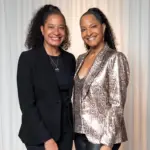
Children being deprived of arts education in schools and programs owing to local and federal budget cuts is what spurred two more of Nat King Cole’s daughters — Natalie’s twin sisters, Casey and Timolin Cole — to establish Nat King Cole Generation Hope in 2008. Since its launch, the nonprofit organization has funded multiple music education programs in South Florida (where Casey and Timolin are based) and Chicago.
“We thought it would be an important and wonderful way to keep our father’s memory alive,” says Timolin. “Casey and I were never in the forefront. We’re not the singers, the performers. So we like to be on this side of the aisle. We’ve proudly provided music education to thousands of children, carrying forward our father’s legacy of hope, harmony and opportunity.”

To broaden outreach and build long-term impact, Nat King Cole Generation Hope —since rechristened as the Nat King Cole Foundation — and the Natalie Cole Foundation recently decided to partner on certain scholarships and charities. “It made sense,” says Grossman, “to complement each other and work together on goals that were common to both of us.”
For example, both foundations fund multiple scholarships for Grammy Camp and support a choir and orchestra at the Harlem School of the Arts. They are also major contributors to the City of Hope and the Children’s Hospital of L.A.
Last November, Berklee College of Music awarded the foundations’ inaugural joint scholarship for voice to sophomore student Paris Pineyro; the $75,000 scholarship also commemorated what would have been Natalie Cole’s 75th birthday. Timolin and Casey recently attended the Vienna Philharmonic Ball in honor of the foundations’ announcement that they would fund the first scholarship for an American to attend the Vienna Philharmonic Academy.
The sisters, who work alongside the Nat King Cole Foundation’s board and development director, note that collaborating together on certain philanthropic efforts gives both foundations the chance to broaden outreach. It also opens the door to evaluating new models that can translate the Cole family’s heritage into real opportunity that will have a long-lasting impact.
“It’s about a shared belief that our father and sister had about the transformative power of music; its timeless ability to inspire, empower and uplift,” says Casey. “And that’s what we hope to do. It’s all about connecting cultures, saving lives across generations and wanting to give children the opportunity to explore and enjoy the power of music.”
