



Nearly five years after the consequential death of George Floyd, one of several minority-supporting initiatives is approaching its anniversary, too.
Equal Access, established by marketing/artist development company mtheory in 2001, typically has two full time employees devoted to advancing the careers of under-represented constituencies among artists and managers in Nashville’s music community. That represents a hefty investment for an initiative that doesn’t generate income for a relatively small firm, but it’s become an essential, almost altruistic, piece of mtheory’s identity.
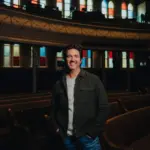
“We’re a weird company in the music industry in a lot of ways,” says CEO Cameo Carlson. “You walk in the door of any of our offices, and the first thing you’re going to see are our core values printed on the wall. So the piece that maybe isn’t altruistic is it does serve our core values.”
Related


The company may see itself as “weird,” but it’s hardly alone in Nashville. Black River, PERK PR, lighting company CLLD and music headhunting operation Turnkey ZRG have all developed programs that provide education series for music professionals at no cost.
“It is very unusual for a for-profit company to do anything for free,” notes Turnkey ZRG music & entertainment managing director Tom Truitt, “because everyone’s always looking at the bottom line.”
Philanthropic exercises are a more natural fit for non-profits or trade organizations such as the Country Music Association, the National Music Publishers Association or Country Radio Seminar.
The Nashville area, however, features more than 20 colleges, universities and technical schools, including two — Belmont University and Murfreesboro’s Middle Tennessee State University — that offer music business degrees. With that much professorial talent in the industry’s midst, it makes sense that the teaching spirit is strong in certain circles. That was the case for CLLD owner Chris Lisle, who held a Belmont faculty position when he decided to launch an intense seminar in 2011 focused on concert vocations, the Touring Career Workshop.
“Seeing the impact that being an adjunct instructor was having on some students, watching those students get it and want to engage the industry — and [seeing] some of them go and thrive — definitely motivated me to kind of lead the next generation,” Lisle reflects.

The turnout was higher than he expected that first year, as was the hunger for knowledge and networking opportunities, and the event that he tentatively viewed as a one-off experience was converted to a non-profit, distinctly separate from CLDD. The event has since been renamed ECCHO Live as Lisle continues to pay it forward through the non-profit.
“Growing up, there was no classes or school to go learn how to be a touring lighting director,” Lisle says. “I had mentors that took me under their wing and taught me the do’s and don’ts. My career has been guided by a string of people that just mentored [me], and so mentoring has always been important to me.”
The landscape of freebie offerings varies:
• ECCHO Live celebrates its 15th anniversary this year with three part-time staff, still holding the fall workshops, but also providing All Access, a free counseling service that supplies up to four sessions per year. The program is expanding to financial and physical wellness therapy.
• Black River recently presented the first in a series of Sessions on the Deck, a dinner for about 20 new and developing talents who experience a panel discussion at the label’s headquarters featuring several established pros.
• PERK PR’s quarterly panels typically draw 45-75 attendees for a 30-minute panel and post-event networking function at the Ampersand Studios workspace on 16th Avenue.
• The mtheory Equal Access classes guide a handful of enrollees culled from minority demographics — including women, Blacks, Latinos and LGBTQ+ individuals, among others — through a full year of development and professional introductions.

• Turnkey ZRG’s The Smartest People in the Room uses a periodic webinar series to pair two people for a Q&A with Truitt interjecting audience questions from Zoom’s chat function.
The Smartest People series was originally a for-profit, in-person presentation — “Think TED Talks for the music business,” Truitt says — but it went away when the pandemic arrived. Truitt pivoted to a streamed experience and, by attracting 800 viewers for the first episode, realized he could reach a larger audience with less financial risk and fewer logistical challenges. He archives them all on YouTube, and by keeping it free, he is able to run it while investing less than 5% of his work week. Viewers are unlikely to leave disappointed, since their financial investment is merely the cost of an hour of electricity for their device.
“When you take people’s money for something, they expect something grand in return,” Truitt says. “I don’t have the time or the bandwidth to turn The Smartest People in the Room into something grand. It’s very organic.”
PERK PR owner Trevor Perkins holds his series in person, mindful of his own early days in Nashville when he found some Music Row gatherings a tad daunting. His goal is to make it an easy space to network while providing a forum for others to share their ideals and business models. The most recent installment focused on the unique branding of Cowboy Cannolis, a mobile dessert bar that is gaining traction in Nashville.
“Empowering others empowers yourself,” Perkins philosophizes. “Creating these panels, I really just wanted to be an asset to help the next generation, and the current generation, to be able to really just flourish in their careers and get quality education on current topics to use in their everyday life.”

He has inserted one of his clients into a panel, providing a tangible benefit to the business, though he’s also careful that the panelists be chosen for their expertise, not for their attachment to PERK.
“I see it as an extension [of my business],” he says. “I feel like the value of helping others that this panel series offers is the same value that I offer within the company.”
Helping was at the heart of the Equal Access initiative. In the wake of the George Floyd murder, the industry held a Blackout Tuesday to acknowledge the continued issues around civil rights. The mtheory staff’s brainstorming that day led to the program, which was well-received by Music Row execs who recognized constituencies that are not well represented in country.
They have invested more than $500,000 in the program, helped release 80 songs and assisted six Grand Ole Opry debuts, though the cultural climate has created hurdles.
“It’s been a very marked change with the political changes in this administration,” Carlson says. “Programs like this that a lot of companies were working on got smaller, or got defunded, or went away entirely. And there are even fewer resources and teams around these artists who need [financing] to self-promote and do all of these things.”
| Subscribe to Billboard Country Update, the industry’s must-have source for news, charts, analysis and features. Sign up for free delivery every week. |
While the executives are devoted to their non-profit campaigns, they still have for-profit companies to keep afloat. In some cases — particularly for Carlson and Lisle — balancing those concerns has been taxing. But the knowledge that they’re making a difference continues to motivate them.
The ECCHO Live workshop and All Access program are “going to be my legacy,” Lisle predicts. “It’s what I want to leave the industry.”