



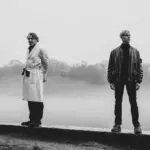
Halfway into 2025, Afrojack had a revelation. Since the pandemic, the producer born Nick van de Wall had been, he says, “very focused on maintaining the business, so making sure Afrojack fans are happy.”
As such, he was focused on making new music, building his Wall Recordings label, playing shows around the world and, when events started again, and putting together the countless edits these performances require. By mid-2025 he realized his business was sound and as such, “I just want to do what I love, and that’s making music purely for the dancefloor and not thinking about commercial appeal or streams.”
While the producer regularly plays some of the biggest stages in dance music, he’s recently found satisfaction in playing more underground music in rooms where no one knows who he is, something he’s been able to pull off via his alias, Kapuchon. Showing up under this moniker during a Miss Monique set at Hï Ibiza last summer, he found the crowd wasn’t responding to the music because they knew Afrojack was playing it, but because they really liked it.
“They were looking at me like, ‘Is that Afrojack?’” he recalls. “It was just me as a guy playing music, and that was the only form of communication. When I play those records and they hit and I see people’s faces go like, ‘Yeah!,’ that’s my feeling of accomplishment for the year. I’m super happy with that.”
Existing on this wavelength of the scene has in fact been so satisfying that in March, Afrojack is embarking on the seven-date Kapuchon Presents Afrojack Tour, which will take him to seven clubs across North America including Sound in Los Angeles, Refuge in Brooklyn and StereoBar in Montreal.
While seeing one of the marquee mainstage artists of the EDM era and beyond on a club tour might be surprising, Afrojack says this in this era of dance music, the rules around genres and which type of artists can play them are — at least among artists themselves — dissolved. “It’s fun to see that we don’t have to be split by genres,” he says. “Everyone can do everything, and I like that.”
Here, he talks about new freedoms in the scene, the “battle” of breaking through as a new artists and more.
Do you think the scene generally used to be more siloed and that artists like yourself had to just play what your known sound was?
It’s more complicated than just the sound. People that go out identify themselves as certain groups. You have people that go to techno parties and say EDM is for for normies. There are people that go hear electronica like Aphex Twin, Nicolas Jaar or Trentemøller and say techno is for amateurs. This is how people try identifying themselves with a genre to say, “We’re more advanced than you.” I don’t know why. I’ve studied a lot of psychology, but to this day I do not understand why people want to feel better than other people.
Are you feeling that evolve?
The nice thing now is to see that the DJs and producers don’t feel like this. The DJs and producers are not purists overall. Someone like Charlotte [de Witte] wouldn’t not play a record because I was part of it, or because it’s accessible or has too much commercial appeal. A song is a song. It’s weird if you listen to a song in a certain way because of who made it. I’m very happy to see now that more people are accepting of this fact.
There are so many conversations within the dance world that do have to do with these social and genre hierarchies you’re talking talking about. That sense of competition and elitism can be really exhausting.
Yeah, but it’s been like this forever.
But you’re saying that the DJs are not playing into it as much as the fans are?
Exactly. And it’s also because there’s some living legends now — if you look at Carl Cox or Richie Hawtin or Tiësto or Armin [van Buuren], they’ve been around for so long that they can kind of supersede the opinion of the younger generation of DJs. If a newer DJ says, “I think this” and then Carl Cox says “It’s actually like this,” you can’t really say anything, because It’s Carl Cox. You have to give it to him.
It’s a blessing that we exist in a genre where many of the legends and pioneers are still around.
Yeah. There’s a lot of bad things about social media, but one of the good things is that it’s made the relationship and understanding between the artist and the dance floor person, the party goer, the listener, super close. There is a bit less mystery, but at the same time, there’s more understanding, because now you have direct access to the mind of the artist behind the music.
Has that closeness in any way affected your career and what you do?
I was watching this interview recently, about how these days, musicians have to build their brand. I posted it on my Instagram. I love making music. I love DJing. I hate going on social media like, “Hello, this my brand new song. Please do this dance, because then the streams will go up.”
Some people messaged me that they agree, and they sent some other memes about like, when Thom Yorke used to release a record, he wouldn’t go out and say, “Hey, now we’re going to do this so you’ll stream the record.” It’s a different life now. You see a lot of artists getting booked because of social media fame or followings, people getting famous for making sexy faces at girls and taking off their shirts while playing a Suno-generated Afro-house remix of some pop song from the ’90s.
Ooh, let it fly.
I’m not going to name any names. I’m happy for these people, that they get to have success in any type of way. But at the same time, I’m like, I’m supposed to compete with this? I love music, and I love the success I’ve been given by my fans and by just the way things panned out. But it does really make me think, like, a few hours a day on making a social media strategy to promote my music, or am I going to use this time to make more music?
How are you striking that balance?
I’m lucky to be in a position where I can afford to have a team to focus on the social media stuff, but it’s definitely a problem for a lot of artists.
What’s your advice for those people who are just starting out, or who don’t have your level of success?
I think the only way to compete with it is to have pure authenticity and to show the authenticity. Instead of trying to say something for the camera, just go live for eight hours while making music. You don’t have to say anything, just show your craft. If you show your craft enough, it will work.
But it’s hard, man, especially now, since you’re competing with six packs, models, influencers, AI generated reels of a car crashes or a cat touching electrical wires or some s–t. Suddenly it’s not just about music, it’s about attention. It’s a tough battle.
Given that you became successful before the dominance of social media, do you get to bypass all of this?
I definitely think I’ve been very lucky to have been here for a while. I’ve had relationships with promoters for 10 or 15, years. I’m kind of in a safe space, as long as people enjoy my sets and my music. But for a new artist right now to break through, oh my god. I sign artists. I have a label. We do artist development. It used to be that if you have one great song and can DJ well, you have a career.
Now, you need to have one great song, then 20 really good songs in the same year, and you need to do great sets, and you need to immediately do 100 shows in the first year for no money in order to cement yourself as an upcoming DJ.

Do you think that there are artists who are as big as they are for the wrong reasons?
Tiny ones, but to really get big, you need so much authenticity. I have not seen anyone who became a worldwide success selling 10,000 or 20,000-capacity venues because of fake s–t.
Sure, like no one on that level can really be faking it.
Like Rampa and Keinemusik, they made the hit of the summer [with “Move.”] They’ve also been doing this type of music for 20 years. It’s not like they just showed up and said “Let’s do some some relaxing Afro-house music.” No, they made really cool underground records for 15 years. They did the struggle. It’s not like they appeared out of nowhere. Same thing with Mau P. He was doing production work as an EDM producer for like, 10 years before he started the Mau P project. For the last five or so years it’s been banger after banger, and his sets are amazing.
Same thing with John Summit. He had “Where You Are” and “Shiver” and this amazing line of releases on his on his Experts Only label. He does the five hour sets. He does the eight hour sets. He pays homage to people like Green Velvet from Chicago. He did the tech house tutorials. People want to hate and say “oh it’s cheesy” or “it’s commercial” because he’s famous. But if you look at what him and people like him are actually doing, they’re putting in the work.
This is what I’m telling the kids we have signed to my label or the Wall Pro Academy. If you put in the work and put yourself out to the world, it will come. But these days, you need to put out a lot. It’s not one song anymore.
The Grammys are this weekend and the nominees include Skrillex, Fred again.., Kaytranada and Disclosure, with the nominees having dozens nominations between them over the years. As someone who’s won a Grammy, do you think there’s a reason the artists you just mentioned aren’t breaking through in the Grammys lane?
Kaytranada is more likely to get nominated than anyone I just mentioned because [artists like us] represent DJ and party culture, and that’s not artsy, and the Grammy are supposed to be artsy. I’m not that guy. I don’t want to play the part of being artsy or whatever. We live in a capitalist world. This is the way it is. If you go on social media and do a campaign, your song will have more success and you will sell more tickets. I don’t like it, but this is how it is.
A lot of artists choose to present themselves in an artsier way, but that’s also a system, I had this conversation a long time ago about selling out, because I did a song with Pitbull. They said “Ah, you sold out.” I was like, Pitbull is an artist that’s been making music for 10 years, and he’s really successful, so people probably like his music. Then he he calls me like “Yo, I really like this song. Can I sing on it?” Am I going to say no because he’s too commercial? Because if I would say no because it’s too commercial, then technically I’m selling out, because I’m saying no to another person to protect my income.
Well, to protect your image.
Yeah, but this is the thing — if you’re protecting your image, you’re selling out to your image. Instead of trying to build an image, just be you… You won’t get respected by certain groups or certain types of cultures, because they need images for their own identification. They identify with certain images. So it’s not the best thing to do from a commercial perspective, but as a human being, I think it’s the greatest thing, because you don’t have to think about your decisions. It’s not like, “I don’t know if I want to work with this guy, because maybe they’re gonna think I’m less cool.” From a musical perspective, that’s not very friendly.

Was that always your approach?
I didn’t do it once, and that was with [not putting my name on] “Titanium,” because at that time I thought I was too cool. This comes with the pressure of being young and getting more famous and being like, “I’ve gotta protect it.” That’s the only time I made the decision not to put my name on something. I like to say I learned from my mistake, but I don’t know if it was a mistake, because I’m very happy with where I am today. It’s definitely something I wouldn’t do again. It’s also what I try to tell people. If you are who you are, people will understand. I said the same thing 15 years ago and I say it again like — do you like chicken?
Uh, yes I eat chicken.
So today you might eat chicken, tomorrow you might eat steak, the next day you might eat vegetables, and the day after that you might eat a cookie. Just because you love one thing doesn’t have to mean you are only that thing. This is what I’m trying to tell people.